
Digital Spelunking
Part I
//
In 1942, Camus wrote an essay using Sisyphus’s punishment as a metaphor for the human condition, arguing that we should acknowledge life’s absurdity yet still choose to live passionately and purposefully. It’s been told and told again that modern life mirrors the Sisyphean ritual; day after day and night by night, we return for another crack at meaning in the seemingly meaningless thrust of life—
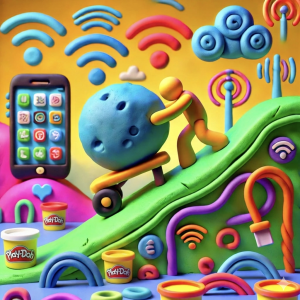
Inspired by Camus— what other myths can we mine for metaphors of the modern mind? Specifically, the digital mind, which Camus himself could never have imagined…
Read on for explorations of Tantalus, Prometheus, and a deep dive into digital spelunking with Plato’s Allegory of the Cave.
*Originally written August 14, 2024 for Kafkaclitus.
Part II.
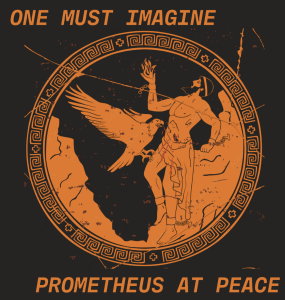
One must imagine Prometheus at Peace
Each day, an eagle devours his liver — a symbol of life, vitality, and consciousness — only for it to regenerate overnight. In the stillness that follows his daily torment, does Prometheus find a moment of peace?
Consider the liver: long revered as the seat of consciousness and vitality, often the first organ predators consume after the kill…
The liver represents more than physical regeneration; it embodies the felt consciousness Prometheus carries with him. Not thought — felt knowing, the gut-sense of being alive before reason intervenes. The devouring of liver as punishment makes knowledge a perpetual torment, but it’s not a loss of thought at stake. Prometheus is tortured by endless awareness.
— — Language a prison, thought the key. (— I think of the German Sprachgitter — the “language grid” through which we both view and are confined by our world. Celan’s grid isn’t merely confinement — it’s the mesh through which experience arrives already fragmented. Every feed is a Sprachgitter.) — —
It’s no mistake the eagle consumes, rather than stabs or severs or some other form of torture. The eagle eats Prometheus’s life-force while memory and intellect remain intact. What regenerates each night isn’t wisdom. It’s raw sentience — unprocessed, unintegrated. The liver grows back not so Prometheus can understand, but so he can be consumed again.
Prometheus is punished not with pain, but with endless consciousness — and modern digital life recreates that punishment.
Heidegger called it Geworfenheit — thrownness. We do not choose awareness; it regenerates without our consent. Prometheus doesn’t opt into his torment any more than we opt into the notification cycle. The liver grows back whether he wants it to or not. Your phone refills whether you open it or not. The punishment isn’t consumption — it’s the impossibility of opting out of consciousness itself.
And perhaps the “fire” Prometheus gives humanity was never only a symbol of liberation, but a literal portal — the ever-flickering flame of creation itself, the generative force we now touch every time we think, speak, or make. A divine wellspring, as well as a curse of the highest order (as in God, the creator).
But what of the quiet that descends when his torment ceases, however briefly?
Simone Weil argued that attention is the rarest form of generosity — and that it requires decreation, a hollowing out of the self to make room for the world. The eagle performs a grotesque parody of this decreation: the organ is emptied not to receive truth but to be filled again with raw, unprocessed stimulation. The feed doesn’t destroy our capacity to think. It resets us — perpetually — to a state of naked reception without integration. We wake and the liver is fresh and the eagle is already circling.
You are what you screen; is your mind clean?
(More on this later, but first printed tees starting at $20; learn more @ youarewhatyouscreen.com.)
In the digital age, we’re caught in this same cycle of consumption and regeneration. The internet, our newest “fire,” grants us boundless knowledge and connection — yet it also consumes us, metabolizing our attention into endless stimulation. If we do not carve out moments of contemplation, we become like Prometheus: trapped in a loop of perpetual mental activity, our consciousness stretched thin by constant connectivity… that we consume social media via FEED…
— — that like moths drawn to light, we hover around the internet. No wonder our reflections are often pale and screen-lit — — // — —
Consider this: what does Prometheus contemplate as his liver regenerates each night?
Overthinking and contemplation are not the same. Overthinking is cognitive overload, the mind on overdrive — frenzied attempts at processing the daily deluge of information. The underlying curse of this digital age, in which our minds are perpetually active yet rarely focused. Always processing, rarely understanding.
Contemplation, by contrast, is the deliberate narrowing of thought — a slowing into presence, observation, depth. Weil’s decreation turned inward: the emptying that makes room for meaning rather than more data.
But to experience what?
— — FOR IMMEDIATE RELEASE — —
“The digital age breeds over-thinkers and smothers contemplators.”
The quiet spaces essential for contemplation drown in constant connectivity. The question isn’t whether we can slow down — it’s whether the architecture of digital consciousness permits slowing. Prometheus doesn’t choose when his liver grows back. We don’t choose when the feed refreshes. The system regenerates us for its own consumption.
Part III.
Why do you Postpone Yourself?
And I saw Tantalus in violent torment, standing in a pool that receded with his every thirsting reach… while branches high and leafy, let stream their fruits above his head, pears, and pomegranates, and apple trees with their bright fruit, and sweet figs, and luxuriant olives forever dangling just above his hungry grasp…
Tantalus’s torment is the endless pursuit of fulfillment always just out of reach. In the digital age, we too are tantalized by promises of fulfillment through endless consumption — of information, of social validation, of entertainment. Yet, like Tantalus, we find that despite our constant reaching, true satisfaction eludes us.
But here’s what Seneca missed.
Seneca wrote that it is not the man who has too little, but the man who craves more, that is poor. Sound advice — practice contentment, let go of desire. But this diagnosis treats Tantalus as a man with a craving problem. It isn’t. It’s an architecture problem.
Tantalus doesn’t just want fruit and water. He wants them because they recede. The recession is the engine. René Girard understood this: we don’t desire objects — we desire what withdraws from us, what others reach for, what the system dangles and pulls away. The algorithmic feed is a Girardian machine. It shows you what’s trending, what others want, what’s just out of reach — then refreshes. Tantalus isn’t punished with unsatisfied desire. He’s punished with desire that is structurally incapable of satisfaction because the object is designed to withdraw.
That’s not a Senecan problem — wanting too much. It’s a design problem. The fruit is coded to recede.
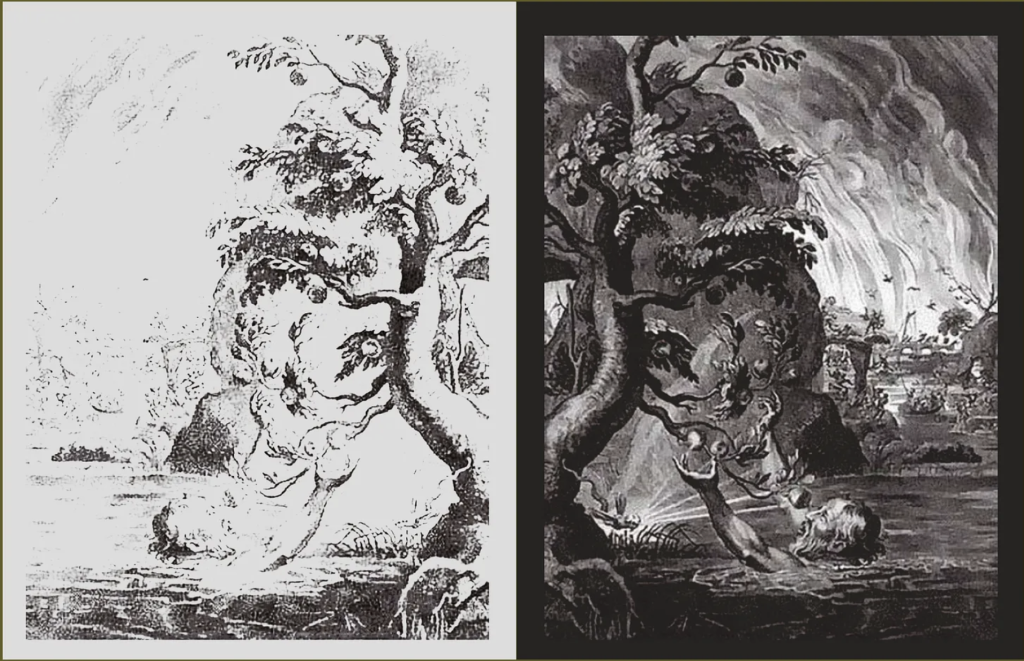
One must imagine Tantalus letting go.
No — we must imagine Tantalus holding on tightly to himself.
But even that formulation hides something. Byung-Chul Han argues that contemporary exhaustion comes not from oppression but from self-exploitation — we are simultaneously Tantalus and the receding water. We set goals that withdraw as we approach because we’ve internalized the logic of perpetual optimization. The fruit doesn’t recede because the gods are cruel. It recedes because we keep raising the branch. The digital Tantalus is not merely a victim. He collaborates in his own torment. Every notification we enable, every platform we feed with our attention — we are both the reaching hand and the retreating water.
How irresistible the promise of “new” content has become…
Be it news, products, or that who-knows-what — these constant wells of entertainment keep us in a perpetual state of anticipation and longing. Thirsting under the pipe, every drop of water brings something… right? Yet, as Seneca warned, “Expecting is the greatest impediment to living. In anticipation of tomorrow, it loses today.” The satisfaction of digital-doping is fleeting, the next thing always beckons and that longing only deepens.
In the endless scroll, we are all Tantalus — reaching for the next update, binge, or bit of useless information. True satisfaction remains just out of reach because it can only reliably be found through contemplation: that stillness through which we earn solace, the wholesome joy of a simple, present experience.
“True happiness is… to enjoy the present, without anxious dependence upon the future.” — Seneca
Apparently Seneca never got around to asking: What happens after letting go?
Lacan might say Tantalus’s real torment isn’t that he can’t reach the fruit — it’s that if he did, it would annihilate him. Satisfaction, fully achieved, would destroy desire, and desire is what constitutes the self. The scroll never ends because ending it would confront us with the void the scroll was covering.
Maybe the terror of that question is the answer. Liberation from this cycle requires more than a shift in digital engagement. It requires willingness to meet the emptiness that the reaching was designed to fill. Rather than endlessly chasing fleeting rewards, seek meaning beyond the screen. Seek yourself — knowing that what you find there may not be comfort, but the beginning of a harder, more honest kind of attention.
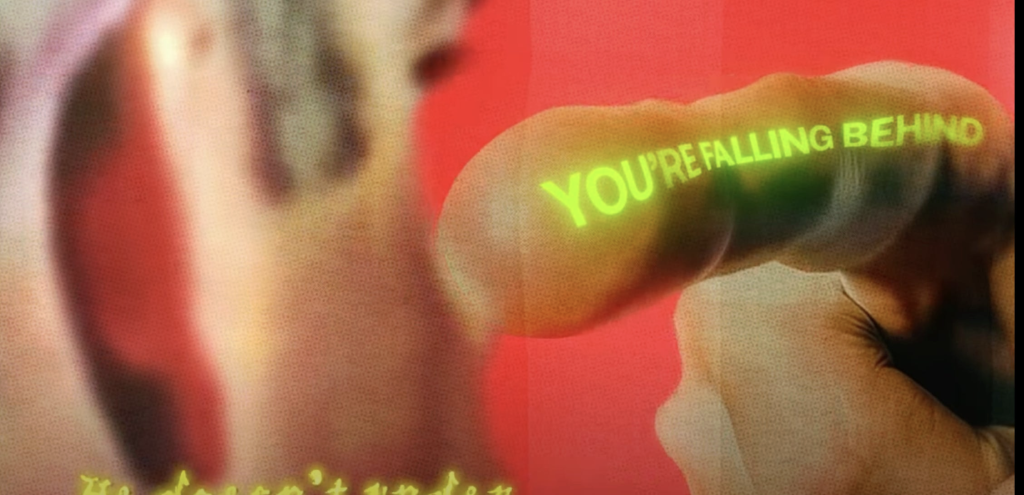
What’s an hour, an afternoon, a day without your screen — Have you tried it?
Have you tried You?
Part IV.
Digital Spelunking and the Allegory of the Cave
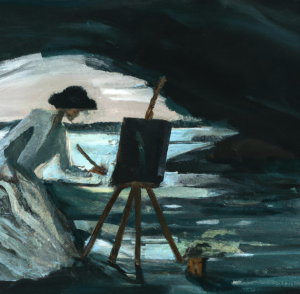
In Plato’s allegory of the cave, prisoners are chained in darkness, mistaking shadows for reality. When one prisoner escapes and sees the world as it truly is, he understands the illusion and yearns to free the others.
But what of digital spelunking? In the depths of the internet, we are modern spelunkers, navigating shadows of data and pixels, mistaking them for the fullness of reality. The digital age has its own cave — a labyrinth of distractions, of digital black holes — where we are chained not by physical bonds, but by our habits of endless consumption.
To see the light, one must turn away from the shadows.
Except — Plato assumed the light existed. That outside the cave, the sun waited.
Baudrillard spent his career arguing that distinction has collapsed. We no longer mistake copies for originals; we live in a world of copies without originals. The digital cave isn’t a place where we mistake shadows for reality. It’s a place where there may be no outside the cave at all. The “light” — contemplation, presence, the unmediated real — might be another shadow wearing the costume of light.
This is the thought I have been avoiding. Prometheus’s torment assumed a difference between consumption and contemplation. Tantalus’s assumed a difference between the fruit and the self. But what if the cave has no exit? What if the screens haven’t obscured reality — they’ve become the medium through which reality constitutes itself?
Heidegger’s “Question Concerning Technology” warns that technology isn’t merely a tool — it’s a mode of revealing that frames everything as standing-reserve, as resource. The digital cave doesn’t just show us false images. It structures what can appear as real in the first place. The shadows have already shaped what we’ll recognize as light.
— — Somewhere, the children raised under perfect digital curation dream of things nameless and lost. Not of perfection, but of the flaw. Not of clarity, but of the blur. Not of knowledge, but of the moment before knowing — when the world was still wild, uncertain, and alive. They are the safest, sanest generation in human history. And they will never know what they’ve lost. — —(link to Digital Futures essay)
So we arrive not at resolution but at honest ground.
What if, like Tantalus, we are caught in an endless cycle of reaching for what’s not real? Like Plato’s cave dwellers, we bathe in the glow of our screens, believing the shadows they cast are ourselves. Letting go — ceasing to reach — might be the first step toward liberation, or it might be one more illusion inside the cave. We cannot know in advance.
In this new mythos, we must imagine Prometheus at peace — not as certainty, but as wager. We must imagine Tantalus holding fast to himself — knowing the emptiness beneath may be real. And we must turn from the digital cave not because we’re sure the light is there, but because the turning itself — the act of attention, the deliberate slowing, the refusal to be consumed — may be the only freedom available inside a system designed to make freedom look like another product.
The turning is the thing, not the arrival.
Contemplation in the digital age cannot promise transcendence. But it can practice resistance — presence over projection, connection over simulation, the slower knowing that the feed will never deliver.
Whether the sun waits outside the cave or not, the act of looking away from the wall changes what the wall can do to you.